Oxford is the ultimate destination for book lovers
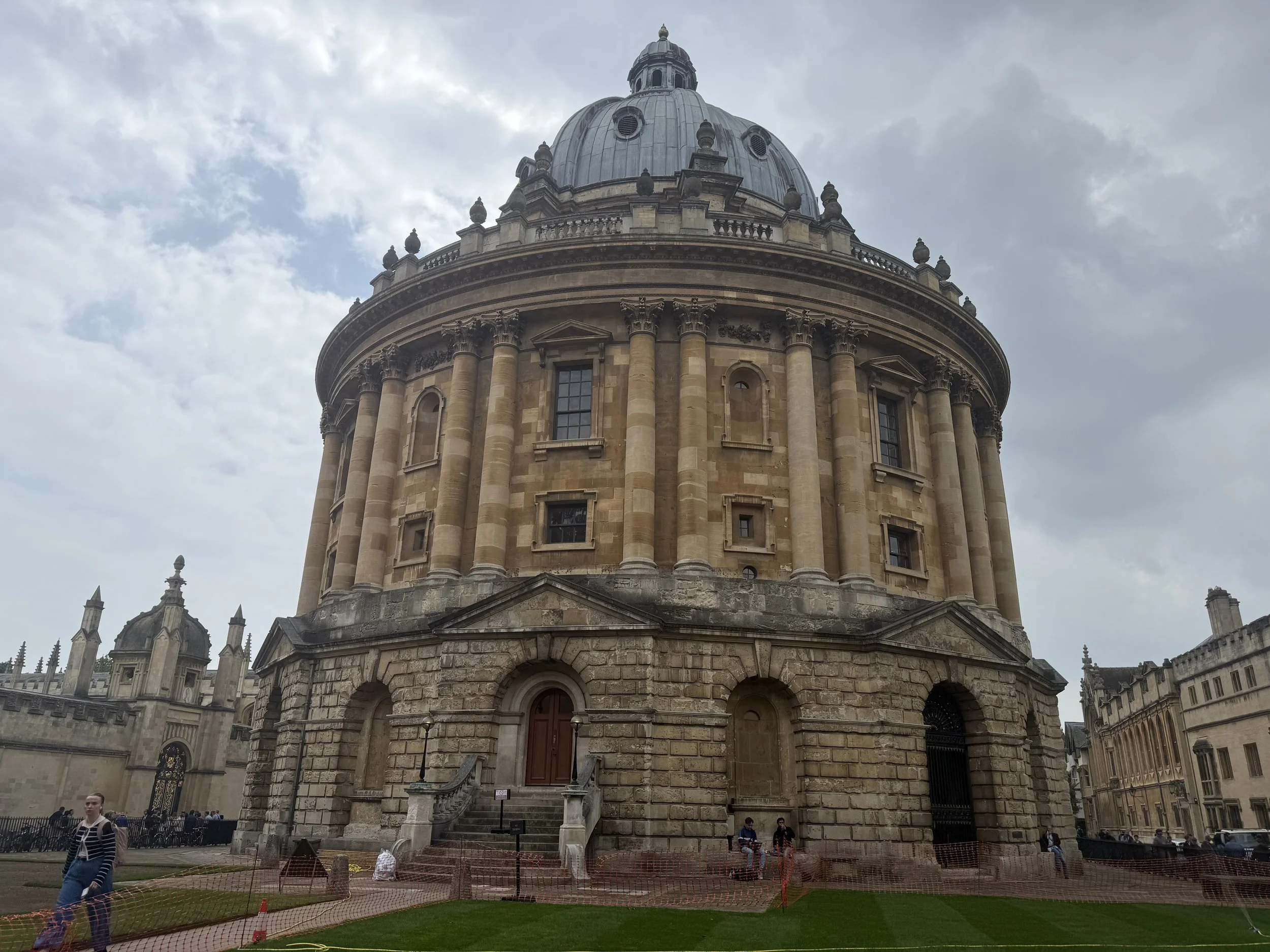
Oxford is the ultimate destination for book lovers
Visiting the place where a favourite book or great work of literature is set or was written is one of the biggest trends in travel.
Oxford, England’s famous university town, has been the breeding ground for many writers, and a visit there made me feel like I was following in the footsteps of the literary elite – generations who helped shape the English language.
I visited the Ashmolean Museum, which opened in 1683 and is the oldest public museum in Britain, and Blackwell’s Bookshop which dates from 1879. A private literary tour with Oxford Official Walking Tours passed a host of colleges, all with legendary students and lecturers. Lord of the Rings author JRR Tolkien was a student at Exeter College, CS Lewis – author of the Narnia books – taught at Magdalen College, and Lewis Carroll, creator of Alice’s Adventures in Wonderland, lectured at Christ College.
The main entrance of Ashmolean Museum of Art and Archaeology.
On a tour of the Bodleian Library, I was admitted to its oldest part, the Duke Humfrey’s Library, which dates from the 15th century and was used as Hogwarts’ library in the Harry Potter films. But it was a character created closer to home – Esme Nicholls from Australian writer Pip Williams’ best-selling The Dictionary of Lost Words – that I pictured as I saw current-day students file in and out of the library, carrying their laptops under their arms (no bags are permitted).
Duke Humfrey’s Library dates from the 15th century and was used as Hogwarts’ library in the Harry Potter films.
In the novel, Esme uses the Bodleian’s collections to research words being considered for the first edition of the Oxford English Dictionary, and a tour of the Oxford University Press Museum in the historic suburb of Jericho brought her story to life. Reading displays on the history of OUP and the dictionary, I discovered that James Murray, the OED’s first editor and a central character of The Dictionary of Lost Words, thought the whole project would take 10 years. In fact, the first fascicle (part) took five years and only reached the word “ant”. Eventually taking 44 years, the first edition of the complete OED was published in 1928 in 10 volumes. Murray died in 1915 while working on the letter “T”.
The Oxford University Press building.
Murray and his team worked in his “scriptorium”, an iron shed nicknamed “Scrippy” in The Dictionary of Lost Words, laboriously collating slips sent in by volunteers containing a suggested word, its meaning and an example of its use. The museum holds some of the original slips and custom-made shelves (more like mini pigeonholes) where they were filed in alphabetical order. Words deemed not acceptable for the OED were discarded.
Before writing The Hobbit and The Lord of the Rings series, Tolkien contributed to the first edition of the OED, primarily working on words in the “waggle to warlock” range. He stated that he learned more in those two years than in any other equal period of his life and went on to become a professor at Oxford.
A bundle of word slips used in the first edition of the Oxford English Dictionary. Picture: Leonie Jarrett
The OED project nearly bankrupted OUP. To survive, it had to become a more mainstream publisher. Tour guide Martin told me that OUP now publishes 7000 new books a year.
The dictionary became available online in 2000. It is now updated every three months with 4000 words being added every year. Defining more than 600,000 words, it is the leading authority of the English language.
Oxford University Press also printed the first copies of Alice’s Adventures in Wonderland. The story is said to have come to Carroll while punting on the River Isis. I went punting; it was scenic and relaxing but, sadly, a literary masterpiece did not come to me.
Oxford University Press is the largest university press and publishing house in the world.
Escape route
Getting there
Oxford is about 100km from central London or 82km from Heathrow Airport. It can be reached by car, train or bus in as little as an hour. Multiple trains and buses run daily.
Touring
Tours to the Oxford University Press Museum are free but are limited and must be pre-booked. Bodleian Library tours run daily. Oxford Official Walking Tours runs a variety of walks.
This article was first published in print in Escape on 9 November 2025 and online on 17 December 2025.